
Trucking
Truck Access Planning: Is Your Facility Ready for a Dry Van?
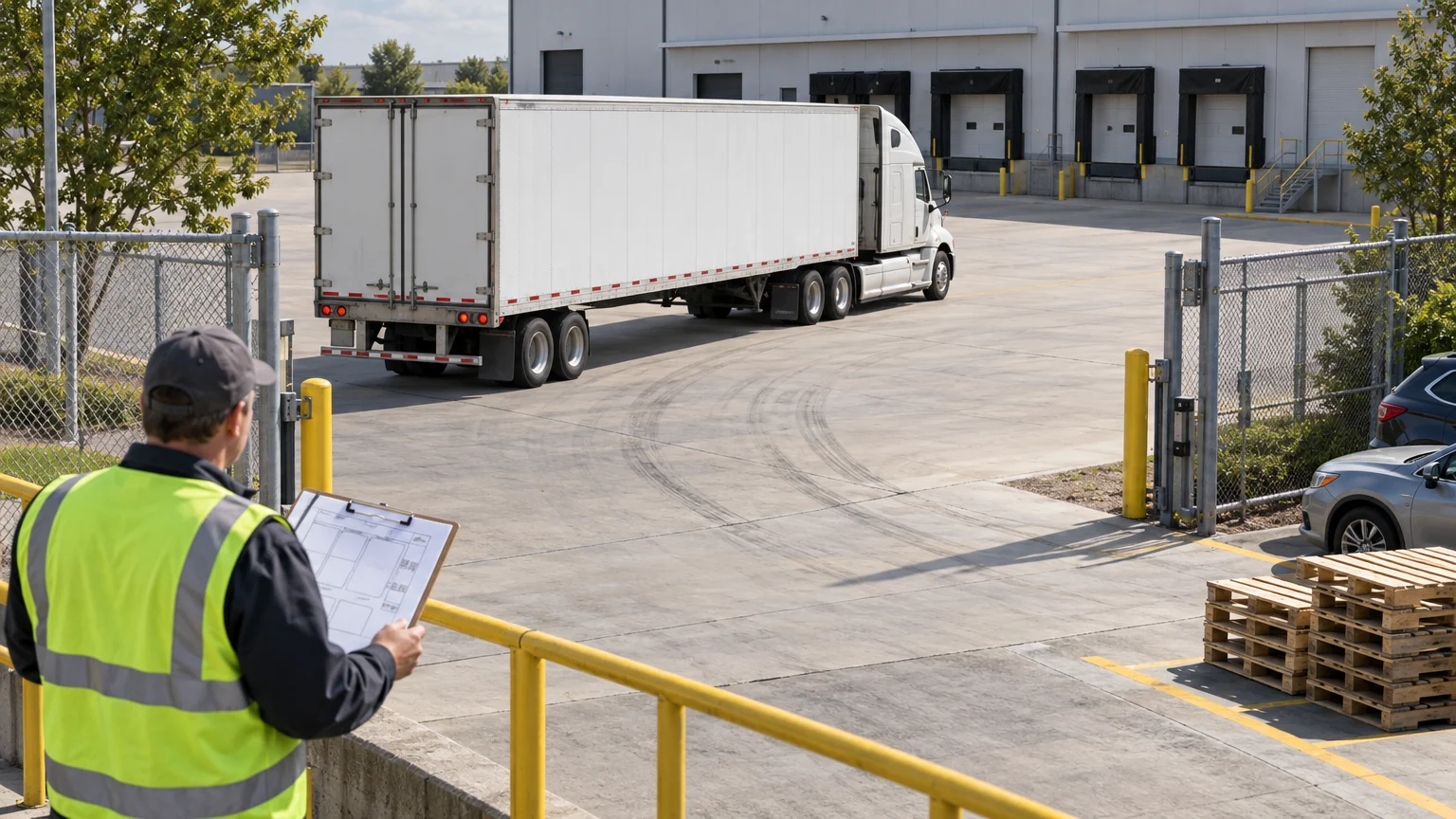
A delivery address tells a driver where a shipment is going. It does not necessarily explain how a tractor-trailer can safely reach the receiving dock. A visitor entrance, narrow driveway, or blocked staging area can turn an otherwise straightforward delivery into a difficult maneuver.
For full truckload shippers, facility access deserves its own planning step. Confirming the approach route and conditions inside the property helps drivers make informed decisions before they reach a tight entrance or congested yard.
Here is how to build a practical truck access plan for dry van pickups and deliveries.
Confirm the Truck Entrance, Not Just the Address
Start by separating the facility’s mailing address from its commercial vehicle entrance. Large industrial properties may have several gates on different streets. A navigation app may direct a truck toward an employee parking lot rather than the shipping office.
Ask the facility to confirm:
- The street and gate used by inbound trucks.
- Whether the entrance supports both arrivals and departures.
- Any restrictions on the direction of approach.
- Where drivers should stop for check-in.
- A contact who can answer access questions during the scheduled visit.
Provide a marked site map when available. Label the truck entrance, check-in location, staging area, and dock assignment process. Keep written directions alongside the map so the driver does not have to interpret an image while approaching the property.
Check the Approach for Truck Restrictions
The last stretch of a route can create problems that are not obvious from a street address. Low structures, posted weight restrictions, tight intersections, and truck-prohibited streets can affect access.
Shippers should share known local restrictions without presenting unverified directions as a guaranteed safe route. Drivers and carriers still need to assess routing against the actual vehicle, load, current signs, and applicable requirements.
Useful details include:
- Known low-clearance structures near the property.
- Construction closures or temporary detours.
- Streets with posted truck restrictions.
- Turns that require a specific approach direction.
Avoid relying solely on passenger-car navigation or older satellite images. Conditions change, and an image may not show overhead obstacles or current traffic controls. If the facility cannot confirm a critical access detail, resolve the question before dispatch rather than asking the driver to investigate on arrival.
Review Turning Space and Yard Conditions
An entrance can look wide enough while leaving too little room to complete the turn. Parked vehicles, fence posts, landscaping, and stored materials may narrow the usable space.
Have facility staff review the actual path from the gate to the dock. Consider both the tractor and trailer throughout the maneuver, including trailer tracking through turns and clearance around nearby objects.
Check for:
- Clear turning areas without parked cars or stored freight.
- Overhead obstacles, including branches and building projections.
- Firm, suitable surfaces along the intended truck path.
- Adequate visibility at intersections and pedestrian crossings.
Do not assume an empty yard during a walkthrough will stay empty. Assign responsibility for keeping truck paths clear during operating hours. Temporary storage should not quietly become a permanent obstruction.
Make Dock Access a Safety Decision
A dock appointment does not make an unsafe approach acceptable. Before arrival, identify anything that could complicate backing, such as a narrow alley, cross-traffic, poor lighting, or pedestrians near the dock apron.
Facilities should establish clear procedures for controlling vehicle and pedestrian movement during backing. If a spotter is used, the driver and spotter should agree on signals and positioning before the maneuver. The driver should stop if visual contact or communication is lost.
Never pressure a driver to continue because the dock is busy or the appointment window is closing. When space or visibility is inadequate, pause and work with the carrier and facility on a safer option.
Plan for Waiting Without Blocking Access
Even a well-prepared facility may need time before a dock becomes available. Tell drivers where they may wait and whether that location is on the property.
Do not assume a nearby street, shoulder, or neighboring business is an acceptable staging area. Parking may be prohibited, unsafe, or unavailable. If the site cannot accommodate waiting trucks, communicate that limitation in advance and coordinate an arrival plan with the carrier.
Include instructions for early arrivals, gate closures, and situations when the receiving contact does not answer.
Keep Access Instructions Current
Treat access notes as a working document. Update them when construction starts, a gate changes, or yard storage affects maneuvering space. After a difficult pickup or delivery, ask what information would have helped and add that detail to future instructions.
Double Diamond Transport is a San Antonio, Texas-based full truckload and dry van carrier serving the United States. Planning a shipment? Visit the Contact page to request a quote and share your facility’s truck access requirements.